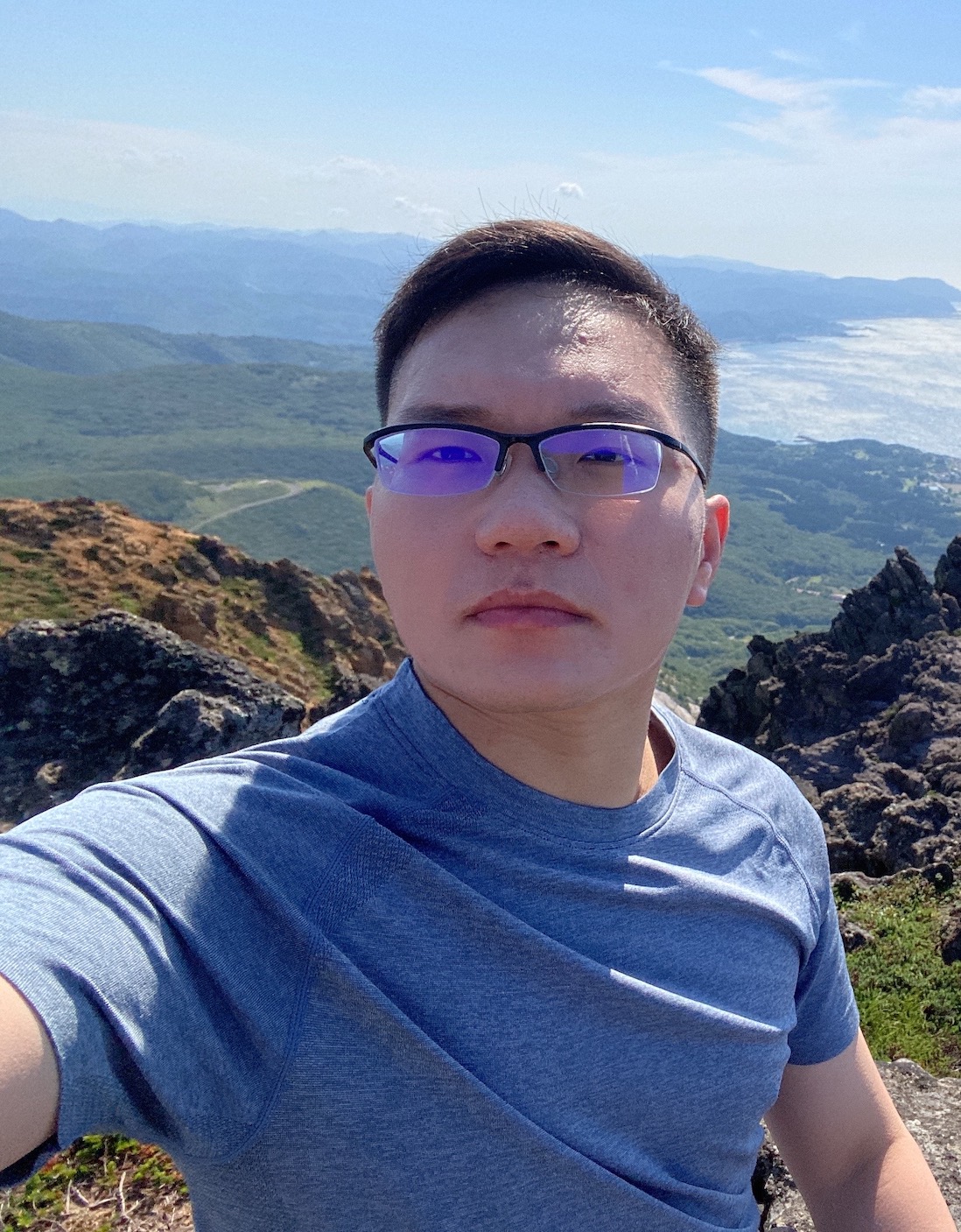
Dr. Chunqi Jiang
Hi, there!
Marine Microbiologist Focusing on Ocean Microbial Genomics
Thank you for visiting here.
(Recent update on 2026/08)
Dr. Chunqi Jiang is a marine microbiologist whose research focuses on understanding the diversity, evolution, and ecological functions of marine microorganisms using genome-resolved metagenomics, comparative genomics, and bioinformatics approaches. Marine microbial communities harbor a vast diversity of uncultivated microorganisms that play essential roles in global biogeochemical cycles, yet their metabolic potential and ecological functions remain poorly understood.
Dr. Jiang integrates large-scale environmental metagenomic datasets with genome reconstruction and comparative genomic analyses to investigate the evolutionary history and ecological roles of key microbial lineages in marine ecosystems. His research particularly aims to uncover how marine microorganisms adapt to diverse environmental conditions and contribute to the transformation of organic matter in the ocean.
Keywords
· Microbiology · Genomics · Ecology · Bioinformatics
Research Topics
1. Genomics and Ecology of Uncultivated Marine Microorganisms
A large fraction of marine microbial diversity remains uncultivated and poorly characterized. Dr. Jiang uses genome-resolved metagenomics and comparative genomics to explore the diversity, metabolic potential, and ecological roles of these microorganisms.
By reconstructing genomes from environmental metagenomic datasets, his research aims to reveal the functional capabilities of uncultivated microbial lineages and their contributions to marine ecosystem processes.
2. Evolution and Metabolism of Chloroflexota (SAR202)
Members of the phylum Chloroflexota, particularly the SAR202 lineage, are widely distributed in marine environments and are believed to play important roles in the degradation of recalcitrant dissolved organic matter.
Dr. Jiang investigates the genomic diversity, evolutionary history, and metabolic potential of Chloroflexota using large-scale genomic datasets. Through comparative genomic analyses, his work seeks to clarify their ecological functions and evolutionary adaptations in marine ecosystems.
3. Diversity and Evolution of Microbial Rhodopsins
Microbial rhodopsins are light-driven proteins widely distributed among marine microorganisms and are thought to contribute to microbial energy metabolism in the ocean.
Dr. Jiang explores the diversity, evolutionary history, and functional diversification of microbial rhodopsins using comparative genomics and environmental metagenomic data. This research aims to better understand how light-responsive systems influence microbial survival and ecological strategies in marine environments.
4. Genomic Adaptation and Evolution of Marine Bacteria
Marine bacteria have evolved diverse genomic strategies to survive in complex and dynamic ocean environments. Dr. Jiang investigates the genomic basis of environmental adaptation in marine bacteria using large-scale comparative genomics.
By analyzing gene content, metabolic pathways, and evolutionary patterns across diverse genomes, his research aims to identify key genetic mechanisms that enable microbial adaptation to marine ecological niches.
Latest News
ISME20 in Auckland
Dr. Chunqi Jiang is participating in ISME20, the 20th International Symposium on Microbial Ecology, which is being held in Auckland, New Zealand, from 16 to 21 August 2026.
Field Sampling in the Sea of Okhotsk (Hokkaido, Japan)
From February 24 to March 3, 2026, Dr. Chunqi Jiang took part in a field sampling campaign along the Okhotsk coast of Hokkaido, Japan.
New publication on Microbes Environ
The new paper entitled “ Restoration of Nitrate Respiration in Pseudomonas aeruginosa under Growth Limitations ” has been published on Microbes and Environments.
Field Sampling in Super-Kamiokande
In December 2025, Dr. Chunqi Jiang participated in a sampling campaign at the Super-Kamiokande facility in Kamioka, Japan.
New publication on Prog Earth Planet Sci
The new paper entitled “ Diel and daily changes of water mass structure and biogeochemical processes in early spring in the western subtropical North Pacific ” has been published on Progress in Earth and Planetary Science.
Latest Papers
The Sea Cucumber Holobiont and Probiotics: Recent Progress on Apostichopus japonicus
Published in Curr Microbiol, 2026
Marine Vibrio Biocatalysts as Unique Green Transformation (GX) Tools at the Time to Sustainable Development Goals (SDGs)
Published in Curr Microbiol, 2026
Restoration of Nitrate Respiration in Pseudomonas aeruginosa under Growth Limitations
Published in Microbes and Environments, 2026
Oceaniferula spumae sp. nov., a novel Verrucomicrobiota bacterium, isolated from sea foam at Noto Peninsula, Ishikawa, Japan
Published in International Journal of Systematic and Evolutionary Microbiology, 2025
Unexpected Diversity in Gene Clusters Encoding Formate Hydrogenlyase Complex Machinery in Vibrionaceae Correlated to Fermentative Hydrogen Production
Published in Curr Microbiol, 2025
Affiliations
- 2022.11 - : Postdoctoral Researcher (特任研究員)
- 2022.07 - 2022.10: Accademic Researcher (学術研究員)
Memberships
- Japanese Society of Microbial Ecology (JSME)
- International Society for Microbial Ecology (ISME)
- American Society for Microbiology (ASM)
Academic Work
- The ISME Journal & ISME Communications: Early Career Scientist(ECS) reviewer
- Current Microbiology: Reviewer
- PLOS ONE: Reviewer
Contact
〒 277-8564 千葉県柏市柏の葉5-1-5
東京大学 大気海洋研究所
Atmosphere and Ocean Research Institute, The University of Tokyo
5-1-5, Kashiwanoha, Kashiwa-shi, Chiba, 277-8564 Japan